


Comments
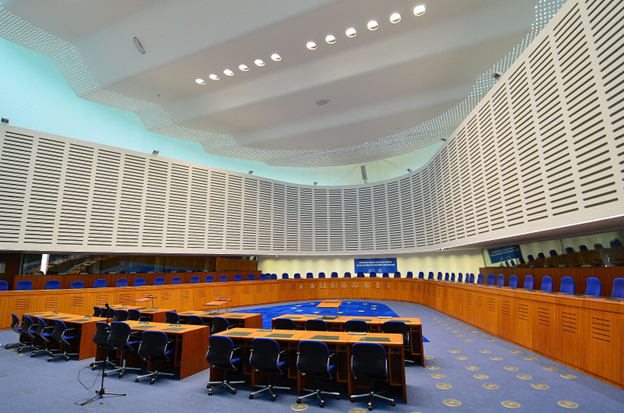
Photo by Adrian Grycuk (CC BY-SA 3.0 PL)
On December 11, 2025, the Grand Chamber of the European Court of Human Rights (ECtHR) delivered its judgment in Tsaava and Others v. Georgia, concerning the dispersal of a large-scale demonstration that took place outside the Georgian Parliament on June 20-21, 2019. The applicants, who included the demonstrators and journalists, alleged that law enforcement authorities used excessive force through the use of kinetic impact projectiles and that the subsequent investigations were ineffective. The case concerned Article 3 (prohibition of inhuman or degrading treatment), Article 10 (freedom of expression), and Article 11 (freedom of assembly) of the European Convention on Human Rights.
The Court found a violation of Article 3, holding that the use of kinetic impact projectiles against demonstrators and journalists had not been shown to be strictly necessary or proportionate. It emphasized the potentially lethal nature of such weapons and held that minimum safeguards must be present in domestic law governing their use, including deployment only last resort in response to an imminent threat, targeted use, adequate training, and advance warnings. It further found that the authorities had failed to conduct an effective investigation into the applicants’ allegations, which amounted to a procedural violation of Article 3.
The Court also ruled that Article 10 was violated, as Georgia failed to show that the force used against journalists was necessary and proportionate. The Court highlighted the watchdog role of journalists in covering demonstrations and held that use of force against them requires particular compelling justification. Regarding Article 11, the Court accepted that protecting the effective functioning of the Parliament constituted a legitimate aim. However, the Court concluded that the manner in which the dispersal was carried out, most importantly the level of force employed, was not necessary in a democratic society, which resulted in a violation of Article 11.
The Court invoked Article 46 and indicated both individual and general measures. It required Georgia to pursue an effective and prompt investigation into the applicants’ allegations and to adopt general measures regulating the use of kinetic impact projectiles.